Raymond Arthur William Haddon (1936 - 2025)
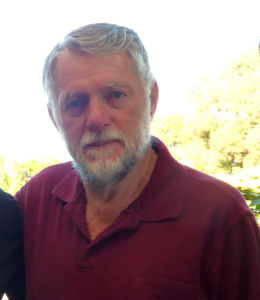
Dr. Raymond Arthur William Haddon, born on 4th October 1936 in Palmerston North, New Zealand, passed away on 31st December 2025 in Taupo, New Zealand, after having lived for decades in other countries, notably Australia (1961-1981) and Canada (1982-1996). He also spent altogether two years in Norway (1973, 1975-77, 1997 and 2000).
Ray’s academic career started with a B.E. in Aeronautical Engineering from University of Auckland in 1961, followed by a B.Sc. in applied mathematics from University of Sydney in 1963, and from the same university a M.Sc. in 1965 and a Ph.D. in 1971. He taught, in various positions, applied mathematics at the University of Sydney between 1961 and 1981. In 1982 he took up a position at the Earth Physics Branch, later merged into Geophysics Division of the Geological Survey of Canada, until his retirement in 1996, when he moved back to New Zealand (Taupo). His two years in Norway were spent as a visiting scientist at NORSAR.
With Ray Haddon’s passing the world has lost a great mathematical geophysicist and a great earth scientist. Ray was a highly principled, innovative and knowledgeable scientist.
Ray’s main collaborator in Sydney was Prof. Keith Bullen, his advisor for his Ph.D., which was concerned with derivation of whole Earth models using free earth oscillation data. These Haddon-Bullen earth models, which involved joint interpretations/inversions of various types of seismic and gravity data, were well ahead of their time. Certain aspects of that work also led Ray to focus on detailed core structure, including doubts on the (then currently accepted) existence of transition layers surrounding the inner core. This was followed up by his (for the first time) proposal for the existence of small-scale heterogeneities in the vicinity of the core- mantle boundary, and he also proposed that seismic wave scattering caused by these heterogeneities was the probable mechanism responsible for the observations. These interpretations, some of which published with J. M. Cleary, were subsequently confirmed through independent studies.
Between 1973 and 1977 Ray had several visits to Norway in order to take advantage of the wealth of new data available from the new and large NORSAR array, and to work with scientists there, notably E. S. Husebye and D. W. King, the latter also visiting from Sydney. Inspired by the work by King, Haddon and Cleary using data from the Warramunga array in Australia, the much larger NORSAR array now made possible a more detailed analysis of precursors (to PP, PKIKP, and P’P’). This built on Ray’s recent work on seismic wave scattering, applied here to the mantle-core boundary and to the upper mantle. A particularly interesting paper from this cooperation was a joint interpretation of P-wave time and amplitude anomalies in terms of lithospheric inhomogeneities, based again on the unique NORSAR data.
These publications were in turn supported by Ray’s theoretical works within modelling of wave propagation in 3-D inhomogeneous media in both the lower and upper mantle, including extension of Born scattering theory to random solid media, development of the Kirchhoff integral method for inhomogeneous media, and development of applied ‘thin-lens’ (or ‘phase screen’ methods for modelling wave propagation in inhomogeneous media.
In support of subsequent forward modelling applications Ray also developed solutions for wave propagation in layered media, including developments to the theory of leaking modes, synthesized frequency-wavenumber methods of Abo-Zena, Bouchon, and Menke for accurate and efficient computation of 3C Green’s functions for complex layered crustal models for frequencies up to 30 Hz and distances up to several hundred kilometres. In short, the method provides complete synthetic seismograms for spatially extensive rupture sources and layered crustal models.
Following the 1988 M5.9 Saguenay earthquake Ray’s focus turned to the interpretation of this and other crustal earthquakes. He developed the modelling theory, code and graphics and recognized the power of spectral ratios to remove path effects and therefore reveal the nature of the rupture source. Through iterative forward modelling Ray found that the Saguenay earthquake most likely was a high rupture-velocity, asymmetric rupture with strong directivity and a partial (but typical) stress drop rather than a high-stress-drop, nearly-point source as was being modelled at the time. He applied his tools also to other eastern Canadian earthquakes and demonstrated that most were complex, having episodic and asymmetric ruptures that propagated at high rupture velocity, thereby casting doubt on the extrapolations to larger magnitudes within contemporary stochastic approaches to ground motion estimation.
More detailed information on Ray’s scientific contributions is available from a web search, such as from Google Scholar. Of his many publications, 10 were printed in BSSA, 9 in PEPI, 8 in GJRaS/GJI, 4 in AGU journals, and 4 in Nature. It is noteworthy that besides his many papers with Prof. Bullen he also published one with Sir Harold Jeffreys, FRS.
Ray went for an early retirement from NRC in 1996, going back, together with his wife Jo, to the country where he grew up. In this he was attracted by New Zealand’s wilderness, wildlife and hunting grounds, which were very important for him. Unfortunately, on one such tour from his home in Taupo in 2012, with his dogs, he suffered a stroke which affected him significantly to the end of his days. Ray Haddon was survived by his sons James and John, and he will be missed by many more, colleagues and friends alike.
Hilmar Bungum and John Adams, with contributions from Alan Green (including the photo)