Agustín Udías (1935 - 2026)
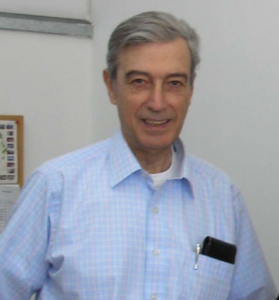
On May 4, 2026, seismology lost one of its most distinguished figures, Agustín Udías. His passing was sudden and unexpected, catching us by surprise as he remained passionately active in his work until the very end. Demonstrating his lifelong commitment, he was actively collaborating with the authors of this tribute on a manuscript regarding two historic earthquakes in eastern Spain at the time of his passing.
Born in Santander (Spain) on August 20, 1935, where he also completed his secondary education, Udías was one of the country's last Jesuit scientists. In September 1953, he entered the Jesuit novitiate of St. Stanislaus Kostka in Salamanca (Spain), the same city where he would pass away in May of this year. In 1954, Udías moved to Havana (Cuba), to complete his novitiate. By the 1958–59 academic year, he began his studies at St. Louis University (USA), graduating with a Bachelor of Arts in 1969 and a Licentiate in Philosophy in 1961. At the same institution, he earned a Ph.D. in geophysics in 1964 under the supervision of Prof. William Stauder, developing one of the earliest Numerical Methods for Focal Mechanism Determination Using S-Wave Data. He then served as a Research Associate at the University of California, Berkeley (1963–1964), collaborating with Prof. Bruce Bolt and where he met the eminent seismologist Prof. Perry Byerly. Following this period, he moved to Frankfurt (Germany), where he remained until late 1968 to study theology at the Theologische Hochschule Sankt Georgen. During this time, he balanced his theological studies with seismological research, working with Prof. Hans Berkhemmer to expand upon his doctoral thesis while also teaching as a Lehrbeauftragter (lecturer) at Goethe University in Frankfurt.
In 1969, Agustín returned to Spain for the first time since departure for Cuba, invited by the Instituto Geográfico Nacional (IGN) for a five-month research stay (February–June) in Madrid. His objective was to collaborate with the IGN on implementing new computational techniques in seismology. During his stay at the IGN, he taught a course on numerical calculation, which was published by the IGN and became one of the first Spanish-language textbooks on this subject. In September 1969, IASPEI and the International Association of Geomagnetism and Aeronomy (IAGA) hosted major general scientific assemblies in Madrid, with Fr. Antonio Romañá, S.J.— a member of IAGA — serving as president of the Local Organizing Committee. At Fr. Romañá's earnest suggestion, Udías made the pivotal decision to remain in Spain, a choice that would profoundly shape both his own career and the future of Spanish seismology. Between 1969 and 1972, he held a position as an Associate Professor of Seismology at the Complutense University of Madrid (UCM), balancing university teaching with his research at the National Geographic Institute (IGN), where he collaborated with Alfonso López-Arroyo and Gonzalo Payo. Together with López-Arroyo, he published some of his most notable works on the seismic source of earthquakes in the Gulf of Cádiz in Tectonophysics and the Bulletin of the Seismological Society of America. That same partnership yielded a 1972 paper in Nature, which provided one of the first studies to explain the earthquakes in the Azores-Gibraltar region in terms of plate tectonics. That same year, he secured a permanent professorship in geophysics at the University of Barcelona, before returning to UCM in 1977 as a Full Professor of geophysics. He remained active until 2005, subsequently serving as Professor Emeritus until 2018.
Udías’s main line of research, which he pursued throughout his life, centered on historical and instrumental seismicity, as well as the seismotectonics of active zones. He developed pioneering numerical methods for determining earthquake focal mechanism, applying them to regions including the Azores-Tunisia region, El Salvador, Peru, and Chile. He was a pioneer in installing the Western Mediterranean (WM) broadband seismic network in the Ibero-Maghrebian region, and contributed significantly to the areas of Earthquake Early Warning Systems. Beyond these domains, Udías proposed and led the first lithospheric structure studies based on deep seismic profiles. His leadership as director of the deep seismic profiling group for Geodynamic Project (1972–1982) was fundamental, yielding the first comprehensive models of the crustal and mantle structure of the Iberian Peninsula. The Spanish Navy actively participated in these campaigns through the Royal Institute and Observatory of the Navy (ROA), initiating a fruitful collaboration between UCM and ROA that endures today through the WM network. International collaboration was equally vital to his work, involving institutions such as Eidgenössische Technische Hochschule (ETH, Zurich, Switzerland), the Institut de Physique du Globe (IPG, Paris, France), the University of Strasbourg (France), the Helmholtz-Zentrum für Geoforschung (GFZ, Potsdam, Germany), the University of Oxford, and Imperial College (London, United Kingdom). Udías also maintained lifelong ties with St. Louis University and Berkeley, returning for summer research stays and sending many of his own doctoral students there. Additionally, his collaboration with Dr. Alvaro Espinosa of the U.S. Geological Survey (USA) facilitated crucial research projects and academic exchanges.
Udías’s international standing was undeniable, forged not only through collaborative projects and visiting tenures to European and American laboratories, but also through his membership in several institutions. These included the Seismological Society of America, the American Geophysical Union, the Royal Astronomical Society, the Royal Spanish Society of Physics, and the European Academy. He served as president of the European Seismological Commission’s (ESC) Subcommittee on the Study of “Focal Mechanism and Earthquake Prediction” (1976–1992), vice-president of the ESC (1984–1986), and was the founding editor of the Journal of Seismology. He authored numerous textbooks on geophysics, numerical analysis, and seismology—several of which were published by Cambridge University Press— as well as books on the history of physics. His historical research extended beyond geophysics, he wrote extensivelyon the Jesuit contribution to seismology, meteorology, and astronomy, and published several texts examining the life and work of Athanasius Kircher.
Alongside his scientific endeavors, Agustín Udías, profoundly explored the intersection of science and faith in his capacity as a Jesuit. For years, he taught a popular course on science and religion at the UCM and authored several textbooks and numerous articles on the topic. Over the last two decades, the figure of Pierre Teilhard de Chardin became a central focus of his scholarship. He dedicated a large part of his later writings to this subject, establishing himself as one of the field’s foremost experts.
Yet, above these monumental scientific and religious contributions stood the professor and magister, who was always ready to listen to and help support his colleagues and students. Agustín Udías possessed true auctoritas, almost imperceptibly, he guided us for decades, shaping many of us into the scientists and individuals we are today. With profound generosity, he consistently placed the interests of others above his own. For all of this, he will be remembered — not only for his vast wisdom and scientific legacy, but for his deep, enduring humanity.
Elisa Buforn and Maurizio Mattesini Universidad Complutense, Madrid (Spain)